

José Balmaceda Riera is a Chilean physician and reproductive-medicine specialist best known publicly as the father of actor Pedro Pascal. Long before his family connection drew celebrity interest, he trained in obstetrics and gynecology, contributed to early assisted-reproduction research, and worked in fertility medicine in Chile and the United States. His career also became tied to the UC Irvine fertility-clinic scandal of the 1990s, a chapter that requires careful distinction between clinic-wide findings, allegations against individual doctors, and his later tax-related guilty plea.
Born in Santiago in 1948, Balmaceda lived through political upheaval, exile, international medical training, family migration, professional success, and legal controversy. He and his late former wife, child psychologist Verónica Pascal Ureta, had four children: Javiera Balmaceda, Pedro Pascal, Nicolás Balmaceda Pascal, and Lux Pascal. His exact net worth, current medical work, height, ethnicity, religion, residence, and social-media presence are not publicly confirmed.
Profile Summary
| Field | Details |
|---|---|
| Full Name | José Pedro Balmaceda; commonly known as José Balmaceda Riera |
| Professional Name | Dr. José P. Balmaceda |
| Date of Birth | August 22, 1948 |
| Age | 77 as of July 2026 |
| Birthplace | Santiago, Chile |
| Nationality | Chilean |
| Ethnicity | Not publicly confirmed |
| Religion | Not publicly confirmed |
| Height | Not publicly confirmed |
| Parents | Mother reportedly named Juanita; father reportedly named José |
| Siblings | Reported to have several sisters; exact number is disputed |
| Former Spouse | Verónica Pascal Ureta |
| Current Partner | Not publicly confirmed |
| Children | Javiera Balmaceda, Pedro Pascal, Nicolás Balmaceda Pascal, Lux Pascal |
| Education | Medical training in Chile; specialist training in Texas; fellowship in reproductive endocrinology |
| Profession | Physician, obstetrician-gynecologist, reproductive endocrinologist, fertility specialist, researcher |
| Famous For | Fertility-medicine career, early GIFT research, UC Irvine connection, and being Pedro Pascal’s father |
| Active Years | Approximately 1974 through at least the 2010s |
| Net Worth | Not publicly established |
| Social Media | No verified personal accounts located |
| Current Status | Living; current medical appointment is not publicly confirmed |
Early Life and Family Background
José Balmaceda was born on August 22, 1948, in Santiago, Chile. Biographical accounts of his early life describe a financially comfortable household. His mother, identified in an academic profile as Juanita, reportedly owned a women’s clothing boutique, while his father, José, was involved in the timber business.
Reports differ on the number of sisters in the family. One account says he grew up with five sisters, while another reported six. Since the available sources conflict, the safest description is that he came from a large family with several sisters.
He attended San Ignatius, a preparatory school in Santiago, before entering medical education. His childhood religion, ethnic identity, exact family address, and detailed school records have not been publicly documented strongly enough to state as fact.
Balmaceda’s adult life unfolded during one of the most difficult political periods in modern Chilean history. Augusto Pinochet seized power in a military coup in September 1973, beginning a dictatorship marked by repression, detention, torture, disappearances, and political exile. José and Verónica were young parents at the time, and the danger surrounding their political circle eventually forced them to leave the country.
Medical Education and Specialist Training
Balmaceda reportedly entered medical school in the late 1960s and graduated from the Catholic University medical program in Chile in 1974. He then began training in obstetrics and gynecology at the University of Chile Hospital.
That early medical path was interrupted by the family’s departure from Chile. After leaving the country, he continued his professional development abroad rather than abandoning medicine. His international training later became central to his work in reproductive endocrinology and fertility treatment.
Following the family’s period of asylum in Denmark, Balmaceda moved to the United States and resumed specialist training in San Antonio, Texas. He completed an obstetrics and gynecology residency around 1980 and later undertook a fellowship in reproductive endocrinology supported through a Rockefeller Foundation program.
Reproductive endocrinology focuses on hormones, fertility, reproductive disorders, and treatments that help people conceive. During the late 1970s and early 1980s, assisted-reproduction medicine was developing rapidly, creating opportunities for specialists working with emerging procedures.
Why the Balmaceda Family Left Chile
Pedro Pascal has spoken publicly about his parents’ departure from Chile. According to his family account, José and Verónica helped a wounded person who opposed the Pinochet regime. When that person was discovered, the couple faced danger and sought refuge with their children.
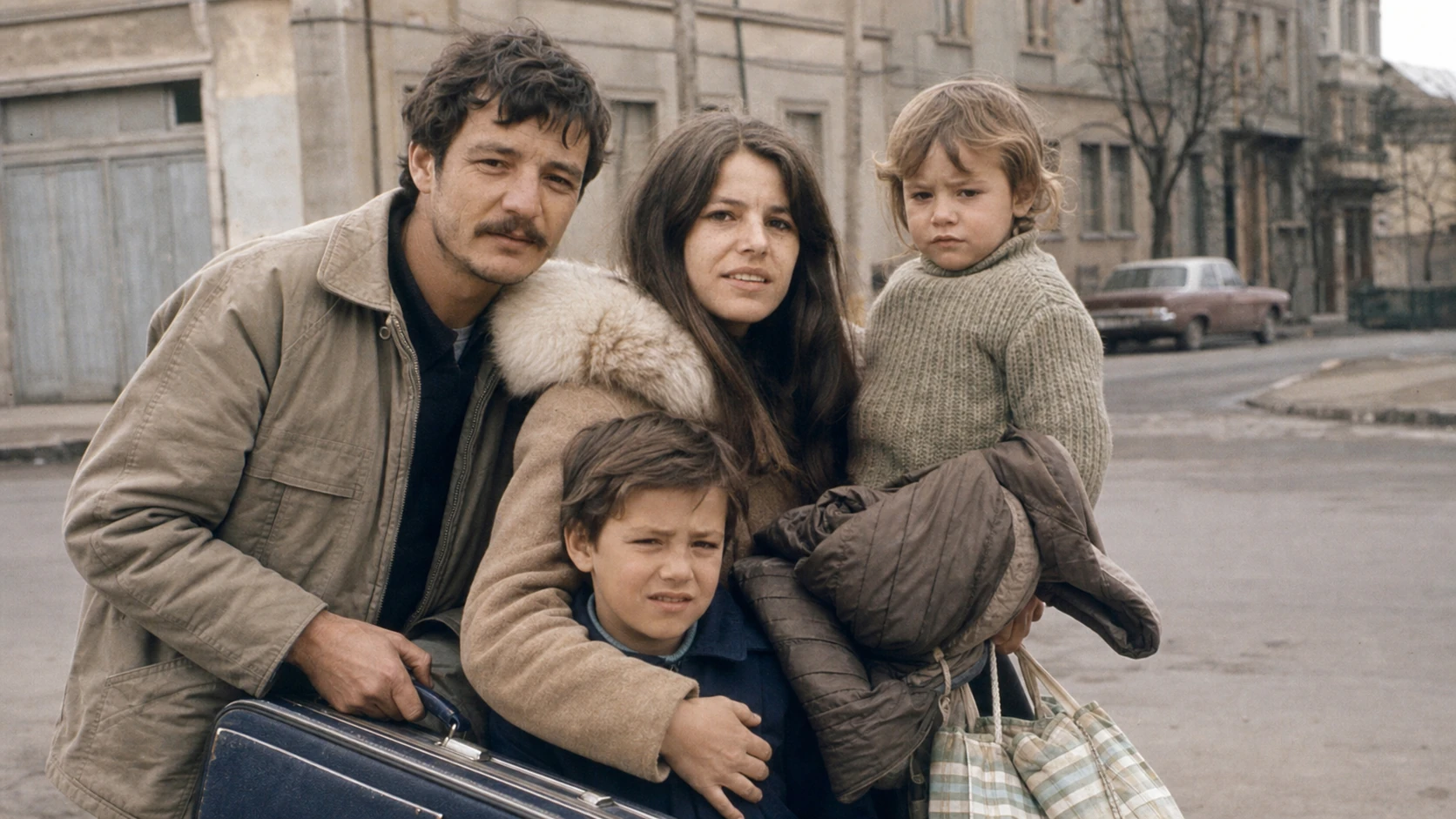
The family first received asylum in Denmark. They later moved to the United States, where José continued his medical training and Verónica pursued her work as a child psychologist.
Their two eldest children, Javiera and Pedro, were born in Chile before the family left. Nicolás and Lux were born later. The family lived in Texas and then California, giving the children an upbringing shaped by both Chilean heritage and life in the United States.
Descriptions of José and Verónica as armed revolutionaries go beyond the strongest public accounts. Pedro has instead described them as politically engaged young Chileans who opposed the dictatorship and became endangered after assisting someone connected with the resistance.
Fertility-Medicine Career
Balmaceda developed his career during a period when fertility treatment was moving beyond conventional surgery and hormone therapy. His work included clinical practice, teaching, research, and participation in developing assisted-reproduction methods.
Medical publications from the 1980s and 1990s list him under professional forms such as J. P. Balmaceda and José P. Balmaceda. His research covered gamete intrafallopian transfer, egg donation, implantation, and other aspects of assisted reproduction.
He later worked in California within the reproductive-medicine program connected with the University of California, Irvine. He was also associated with a private fertility practice alongside physicians Ricardo Asch and Sergio Stone.
Work on the GIFT Procedure
One of the clearest achievements in Balmaceda’s medical record is his contribution to early research involving gamete intrafallopian transfer, known as GIFT. The procedure places collected eggs and sperm together inside a fallopian tube, allowing fertilization to occur within the body rather than in a laboratory dish.
In 1984, Balmaceda coauthored a paper in The Lancet reporting pregnancy after translaparoscopic GIFT. He continued appearing as an author on related fertility studies during the following years.
It would be inaccurate to describe him as the sole inventor of GIFT. He worked as part of a medical research team that included other specialists, and the procedure developed through the combined efforts of several physicians and researchers.
His documented participation still gives him a place in the early clinical history of assisted reproduction. That work explains why he had established an international professional reputation before the UC Irvine controversy brought very different attention to his name.
The UC Irvine Fertility Clinic Controversy
Balmaceda’s medical career cannot be covered responsibly without addressing the fertility-clinic scandal connected with UC Irvine. During the 1990s, patients accused physicians at the clinic of using or transferring eggs and embryos without proper consent. Investigations also examined research oversight, financial practices, billing, and serious failures in patient records.
The clinic involved Balmaceda, Ricardo Asch, and Sergio Stone. University inquiries found that unauthorized reproductive activity had occurred within the program. Court records later described major consent and recordkeeping problems.
A crucial distinction is that clinic-wide findings do not automatically establish that Balmaceda personally carried out every disputed procedure. Investigators faced incomplete records and limited cooperation, making it difficult to determine which physician was responsible for each individual act.
The scandal led to lawsuits, university action, professional fallout, and criminal investigations. It became one of the most widely reported fertility-clinic cases in the United States and raised lasting concerns about patient consent, medical oversight, ownership of reproductive material, and institutional accountability.
Departure from California
Balmaceda returned to Chile in 1995 as investigations and lawsuits developed. Contemporary reporting said he became associated with Clínica Las Condes and sought to continue his medical career there.
His departure caused some reports to characterize him as a fugitive. Federal charges were filed after he had left the United States, although published accounts disagree over the exact number of counts in the original case.
He was arrested in Argentina in January 2001 in connection with the U.S. proceedings. He later returned to Chile rather than immediately facing trial in California.
The long legal history is often simplified incorrectly online. Some biography pages state that he was convicted of stealing eggs or embryos. The reviewed public record does not support that wording.
Federal Case and 2022 Guilty Plea
More than two decades after the original fertility-clinic investigation, Balmaceda returned to the United States to resolve part of the federal case. He surrendered to authorities in February 2022 after signing a plea agreement the previous year.
His admission concerned tax-related conduct. He acknowledged failing to report portions of income received during 1991 and 1992, resulting in unpaid federal taxes.
The guilty plea was not a conviction for stealing reproductive material or performing an unauthorized embryo transfer. That distinction matters because online summaries sometimes merge the clinic allegations with the offense he ultimately admitted.
A later report stated that he received one year of probation, restitution, and a financial penalty in September 2022. Exact sentencing figures should be attributed carefully unless taken directly from the final federal judgment.
The outcome did not erase the serious institutional findings surrounding the fertility program. It did, however, leave the public record more specific than many celebrity biographies suggest: Balmaceda pleaded guilty to tax fraud connected with undeclared income, not to embryo theft.
Return to Chile and Later Professional Work
After leaving California, Balmaceda continued appearing in Chilean medical circles. Reports connected him with Clínica Las Condes, and his name appeared in later discussions, interviews, and professional events focused on reproductive medicine.
He participated in medical debate and education related to fertility treatment into the 2010s. A 2019 Chilean profile looked back on his career, his work with assisted reproduction, and the development of fertility procedures.
These appearances support the conclusion that he remained professionally engaged after returning to Chile. They do not prove that he is still treating patients in 2026.
No reliable current clinic page, licensing profile, retirement notice, or official professional biography has confirmed his present role. The most accurate wording is that he is a former or longtime fertility specialist whose current clinical status is not publicly confirmed.
He has also made occasional public appearances outside medicine. Chilean reporting connected him with a small role in the 2019 comedy No quiero ser tu hermano, a film featuring Lux Pascal. Acting was not his main profession, and no larger film or television career is documented.
José Balmaceda Riera’s Wife and Children
José Balmaceda was married to Verónica Pascal Ureta, a Chilean child psychologist. The couple married as young adults and raised four children across Chile, Denmark, Texas, and California.
They later separated after returning to Chile. Verónica died in February 1999. Because they were no longer together at the time, describing her simply as his current wife or calling José a widower without context would be misleading.
No later marriage, wife, girlfriend, or partner has been reliably confirmed. His current relationship status should be treated as private.
Javiera Balmaceda
Javiera Balmaceda is the eldest of the four siblings. She has built a career in entertainment production and media, including executive work connected with film and television.
Pedro Pascal
Pedro Pascal was born José Pedro Balmaceda Pascal in Santiago in 1975. He became internationally known through roles in Game of Thrones, Narcos, The Mandalorian, The Last of Us, Gladiator II, and other major productions.
He later adopted Pascal as his professional surname in honor of his mother. Pedro’s success is the main reason many celebrity readers first encounter José Balmaceda’s name, although José had a substantial medical career of his own.
Nicolás Balmaceda Pascal
Nicolás Balmaceda Pascal followed a medical path. Public family profiles have described him as a physician working in pediatric neurology, although he maintains a much lower media profile than Pedro, Javiera, or Lux.
Lux Pascal
Lux Pascal is a Chilean actor and activist. She has appeared in screen and stage work and has often joined Pedro at public events.
José has been photographed supporting Pedro and Lux, including at the London premiere of Gladiator II in November 2024. These appearances provide a limited public view of their family relationship without revealing the details of their private lives.
Parents and Siblings
Information about Balmaceda’s parents is limited. An academic biography identifies his mother as Juanita and says she owned a women’s clothing boutique. His father, also named José, reportedly owned timber mills.
Their complete legal names, birth details, and later lives are not firmly documented in the strongest public sources. These gaps should not be filled with unsourced family trees.
His number of siblings is also uncertain. Sources agree that he grew up with several sisters, but they differ on whether there were five or six. The names and biographies of those sisters are not publicly confirmed.
Height, Ethnicity, Nationality, and Religion
José Balmaceda Riera is Chilean. His birth in Santiago and early education in Chile are publicly documented, while U.S. citizenship has not been confirmed.
His ethnicity is not publicly established. Describing him as Chilean identifies nationality and national background but does not prove a narrower ethnic category.
His religious beliefs are also unknown. Attending a Catholic educational institution does not establish his current faith, personal practice, or religious identity.
No dependable source provides his height. Measurements found on copied biography sites should not be treated as verified.
Net Worth and Income Sources
José Balmaceda Riera’s net worth is not publicly established. There are no dependable financial disclosures, business filings, property records, or direct statements that support a precise estimate.
Some low-quality biography pages publish exact figures, including estimates in the hundreds of thousands of dollars. Those numbers have no clear methodology and should not be repeated as fact.
His historical income likely came from hospital medicine, university appointments, fertility treatment, private clinical work, consulting, medical research, and professional speaking. Those sources explain how he earned money but do not reveal his current assets.
Legal payments connected with his 2022 case also cannot be used as a shortcut for calculating wealth. Restitution, unpaid taxes, fines, and legal costs show financial obligations, not a complete picture of personal net worth.
It would also be wrong to connect his finances automatically with Pedro Pascal’s earnings. Adult family members do not necessarily share assets, income, property, or business arrangements.
Social Media and Public Image
No verified personal Instagram, X, TikTok, or Facebook account has been identified for José Balmaceda. Accounts using his name or family photographs may be fan pages, repost pages, or unrelated profiles.
His public image comes mainly from three sources: his historical work in fertility medicine, reporting about the UC Irvine clinic, and his relationship with Pedro Pascal and the wider Balmaceda Pascal family.
Medical reporting portrays him as a physician who contributed to early assisted-reproduction research. Legal and institutional records connect him with serious failures at the UC Irvine fertility program. Celebrity coverage usually presents him as Pedro Pascal’s father and as part of a Chilean family shaped by exile.
These strands make his public biography unusually difficult to reduce to a single label. He is neither only a celebrity parent nor only a figure from a medical scandal.
Latest Update
José Balmaceda’s recent public activity has been limited. In November 2024, he appeared with Pedro Pascal and Lux Pascal at the London premiere of Gladiator II, providing one of the clearest recent public photographs of the family together.

He was also seen in Chilean media connected with family and film events during 2025. Those appearances show that he remained publicly active on occasion, but they do not confirm a new profession, acting career, or medical appointment.
As of July 2026, no verified announcement has established that he has returned to regular clinical practice, retired officially, launched a public business, or opened an official social-media account. He remains alive, but his exact residence and day-to-day activities are not publicly confirmed.
Common Misinformation About José Balmaceda Riera
One frequent error is the claim that he was convicted of stealing eggs or embryos. The public record reviewed for his biography shows that his eventual guilty plea concerned unreported income and federal tax fraud.
Another mistake is calling him the sole inventor of GIFT. He contributed to early clinical research as part of a team, which is meaningful without giving him exclusive credit.
Celebrity pages also publish unverified height, ethnicity, religion, social-media handles, relationship details, and net-worth figures. These claims often repeat across sites without stronger documentation.
His full name can also cause confusion. Medical publications often use José P. Balmaceda, while academic sources use José Pedro Balmaceda and celebrity searches commonly use José Balmaceda Riera. Pedro Pascal’s birth name, José Pedro Balmaceda Pascal, creates an additional risk of mixing father and son.
Frequently Asked Questions
Who is José Balmaceda Riera?
José Balmaceda Riera is a Chilean physician, reproductive-medicine specialist, and medical researcher. He is also known as the father of actors Pedro Pascal and Lux Pascal.
How old is José Balmaceda Riera?
He is 77 years old as of July 2026. His reported date of birth is August 22, 1948, which means he will turn 78 in August 2026.
Where was José Balmaceda Riera born?
He was born in Santiago, Chile. He later lived in Denmark and the United States before returning to Chile.
What kind of doctor is José Balmaceda?
He trained as an obstetrician-gynecologist and later specialized in reproductive endocrinology. His work focused on fertility treatment and assisted-reproduction procedures.
Did José Balmaceda invent GIFT?
He was part of a medical team that published early research on gamete intrafallopian transfer. Available evidence does not support calling him the sole inventor of the procedure.
Who was José Balmaceda Riera’s wife?
He was married to Chilean child psychologist Verónica Pascal Ureta. They later separated, and Verónica died in 1999.
How many children does José Balmaceda have?
He has four children: Javiera Balmaceda, Pedro Pascal, Nicolás Balmaceda Pascal, and Lux Pascal. Their careers include entertainment production, acting, medicine, and public advocacy.
Was José Balmaceda convicted in the UC Irvine fertility scandal?
He was not convicted of stealing eggs or embryos in the legal outcome covered by the reviewed record. His 2022 guilty plea concerned tax fraud involving income that he failed to report for 1991 and 1992.
What is José Balmaceda Riera’s net worth?
His net worth is not publicly confirmed. Exact figures published by unsourced celebrity sites should be treated as speculation.
Is José Balmaceda Riera on Instagram?
No verified personal Instagram account has been located. Profiles using his name should not be assumed to be official.
Conclusion
José Balmaceda Riera’s biography reaches far beyond his connection to Pedro Pascal. He trained across countries, worked during the formative years of assisted-reproduction medicine, and contributed to early research involving the GIFT procedure.
His career is also marked by his association with the UC Irvine fertility clinic, where patients experienced serious consent and recordkeeping failures. Accuracy requires separating those clinic-wide findings from the tax offense to which he later pleaded guilty.
Family is the main source of his present public visibility. As the father of Javiera, Pedro, Nicolás, and Lux, he is part of a family whose story includes Chilean political exile, migration, medicine, film, television, and cultural life.
Many personal details remain outside the reliable public record. His current relationship, exact residence, active medical status, height, religion, ethnicity, net worth, and social-media presence should remain listed as not publicly confirmed rather than turned into convenient biography claims.