

José Balmaceda Riera is a Chilean physician specializing in reproductive medicine who is widely known as the father of actors Pedro Pascal and Lux Pascal. Born in Santiago in 1948, he built a medical career across Chile and the United States, contributed to early research on gamete intrafallopian transfer, and later became connected to the controversial UC Irvine fertility clinic investigation. His biography also includes political exile, the loss of his wife, Verónica Pascal Ureta, four accomplished children, and recent public appearances with his family.
Interest in José Balmaceda Riera often begins with Pedro Pascal, but his own public record is substantial and complicated. His work appeared in respected medical journals, while his name also remains associated with allegations and legal proceedings arising from fertility practices in California during the 1990s. Reliable information about his height, religion, ethnicity, current relationship, present medical work, social media and net worth is limited, so those details should not be treated as established facts.
Profile Summary
| Field | Details |
|---|---|
| Full Name | José Pedro Balmaceda Riera |
| Professional Name | Dr. José Balmaceda; José P. Balmaceda |
| Date of Birth | August 22, 1948 |
| Age | 77 as of July 17, 2026 |
| Birthplace | Santiago, Chile |
| Nationality | Chilean |
| Ethnicity | Not publicly confirmed |
| Religion | Not publicly confirmed |
| Height | Not publicly confirmed |
| Parents | Father identified as José; mother identified as Juanita; full names not firmly confirmed |
| Siblings | Reportedly five sisters; their names are not publicly confirmed |
| Spouse | Verónica Pascal Ureta, who died in 1999 |
| Current Partner | Not publicly confirmed |
| Children | Javiera Balmaceda, Pedro Pascal, Nicolás Balmaceda and Lux Pascal |
| Education | Medical education in Chile; obstetrics and gynecology training in Chile and the United States |
| Profession | Physician, obstetrician-gynecologist and reproductive-medicine specialist |
| Famous For | Fertility medicine, early GIFT research, the UC Irvine fertility case and being Pedro Pascal’s father |
| Active Years | Medical career documented from the 1970s; current practice status is not publicly confirmed |
| Net Worth | Not publicly confirmed |
| Social Media | No verified personal accounts publicly confirmed |
| Current Status | Alive; recent public appearances documented in 2024 and 2025 |
Who Is José Balmaceda Riera?
José Pedro Balmaceda Riera is a Chilean doctor whose career focused on obstetrics, reproductive endocrinology and fertility treatment. Medical publications commonly identify him as José P. Balmaceda or José Pedro Balmaceda, while profiles about the Pascal family often use José Balmaceda Riera.
His professional life developed during a period of rapid change in assisted reproduction. He was part of a group of physicians who studied gamete intrafallopian transfer, commonly known as GIFT, during the 1980s. The procedure involved placing eggs and sperm into a patient’s fallopian tube so fertilization could occur inside the body.
Outside medicine, he is best recognized as the father of Pedro Pascal, the actor known for Game of Thrones, Narcos, The Mandalorian, The Last of Us and major films. He is also the father of actor Lux Pascal, entertainment executive Javiera Balmaceda and Nicolás Balmaceda, who has pursued work connected to medicine and neuroscience.
Balmaceda’s public biography cannot be separated from the UC Irvine fertility scandal. Investigations examined unauthorized transfers of reproductive material, research misconduct, private clinic finances and insurance practices. His exact legal responsibility must be described carefully because institutional findings, civil allegations, federal charges and the later tax case were not the same thing.
Early Life and Family Background
José Balmaceda was born on August 22, 1948, in Santiago, Chile. An institutional biography published by Arizona State University’s Embryo Project reports that he grew up with five sisters.
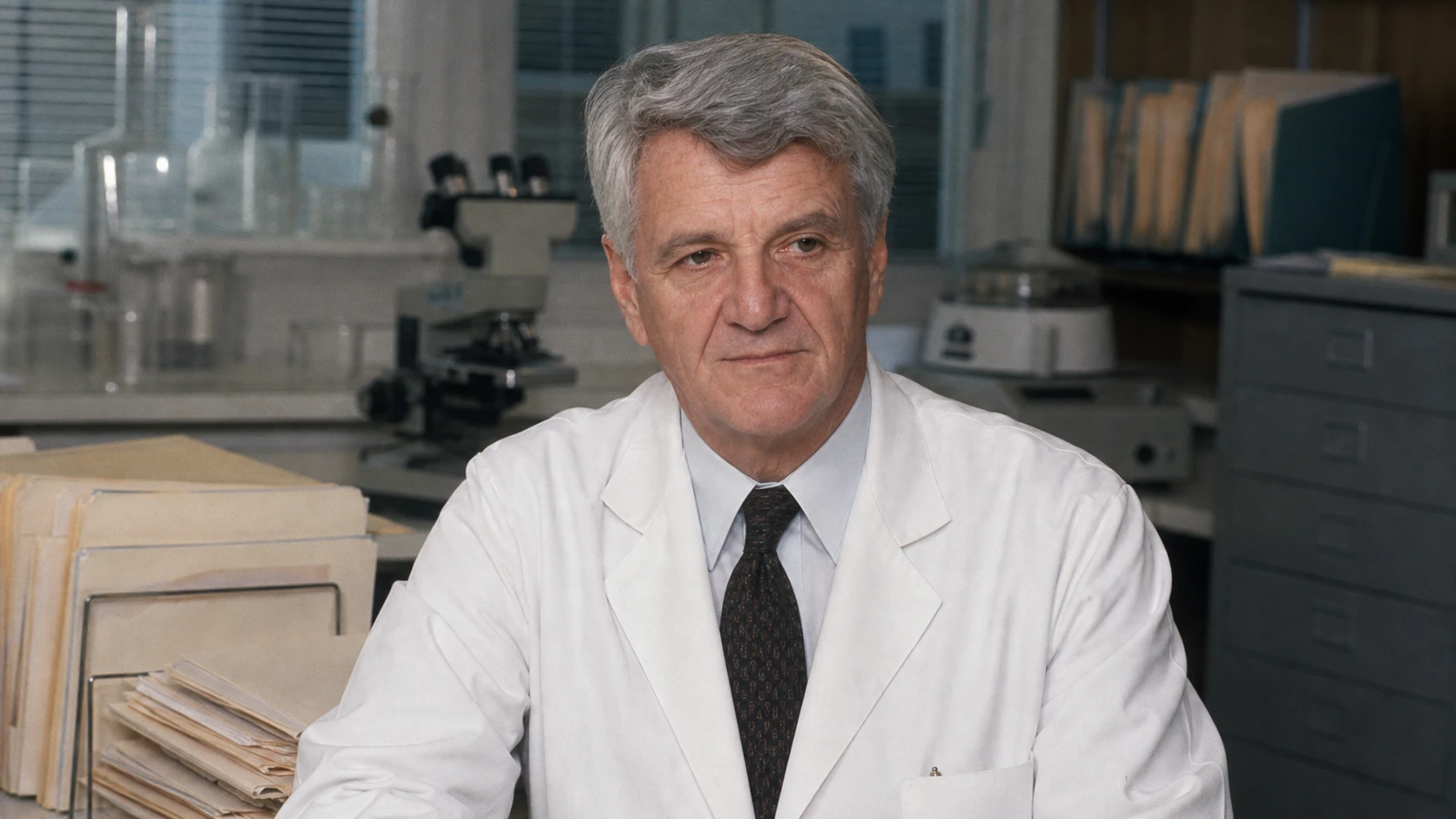
The same profile identifies his father as José and his mother as Juanita. His father reportedly operated timber mills, while his mother owned a boutique. Their complete legal names and detailed biographies have not been firmly established through widely available primary records.
Balmaceda attended San Ignatius school in Chile. One of his school acquaintances was Sergio Stone, who later became a physician and worked with him in California. That early connection became relevant decades later when both men were involved with the fertility operation associated with the University of California, Irvine.
Claims about Balmaceda’s ethnicity and religion are often copied across biography sites without reliable support. He is Chilean by nationality, but a specific ethnic identity is not publicly confirmed. His attendance at a Catholic educational institution does not, by itself, establish his personal religious beliefs.
Medical Education and Political Exile
Balmaceda studied medicine in Chile and graduated in 1974. He then began training in obstetrics and gynecology at the University of Chile Hospital.
His early career was disrupted by the political crisis that followed Chile’s 1973 military coup. Balmaceda and his wife, Verónica Pascal Ureta, had connections to people who opposed Augusto Pinochet’s regime. Accounts from Balmaceda and profiles of Pedro Pascal describe the family as having helped individuals who were in danger.
The couple left Chile with their young children in 1975. They initially traveled to Denmark before moving to the United States. Their departure placed the family among the many Chileans whose lives were reshaped by exile during the military dictatorship.
In Texas, Balmaceda continued his medical education. He completed residency training in obstetrics and gynecology and moved into the developing specialty of reproductive endocrinology. His training later brought him into professional contact with Ricardo Asch, a physician who became one of his closest collaborators.
Fertility Medicine Career
Balmaceda entered reproductive medicine while assisted-conception techniques were still developing. In the late 1970s and early 1980s, doctors and researchers were testing new methods for helping patients who could not conceive through conventional treatment.
His work in the United States included training connected to reproductive endocrinology. An institutional account states that he received a Rockefeller Foundation fellowship in 1981. That opportunity brought him into a research group working with Ricardo Asch.
The team studied fertility procedures that differed from standard in vitro fertilization. Rather than allowing fertilization to occur in a laboratory, GIFT placed eggs and sperm together inside a fallopian tube. The technique received considerable medical attention during the 1980s, although later advances in IVF reduced its use.
Balmaceda’s name appeared on peer-reviewed medical research concerning the procedure. A 1984 paper published in The Lancet reported a pregnancy following translaparoscopic gamete intrafallopian transfer. Other studies followed, including clinical reports and an international review of hundreds of cases.
Did José Balmaceda Invent GIFT?
José Balmaceda helped study and develop GIFT as part of a medical team. He should not be described as its sole inventor.
The published research listed several physicians and researchers, including Ricardo Asch, José P. Balmaceda and other collaborators. Later interviews sometimes gave Balmaceda broad credit for creating the procedure, but the scientific record shows a group effort.
The most accurate wording is that he was an early contributor to GIFT research and participated in the team that tested and promoted the method. This recognizes his documented work without overstating his individual authorship.
Work at UC Irvine
By the mid-1980s, Balmaceda was working in California and became associated with the University of California, Irvine. He worked alongside Ricardo Asch and Sergio Stone in reproductive medicine.
The doctors also became involved in a private fertility operation known as the Center for Reproductive Health. The relationship between their university duties and private practice later became one focus of institutional scrutiny.
During this period, the clinic treated patients seeking help with infertility and conducted research involving assisted reproduction. Balmaceda continued publishing medical work, and his professional standing was tied to a field that was receiving growing public and commercial attention.
That career ended in controversy after whistleblowers and investigators raised serious concerns about the clinic’s conduct.
The UC Irvine Fertility Scandal
The UC Irvine fertility scandal became public in the mid-1990s. Investigators examined allegations that reproductive material had been transferred between patients without proper authorization, that research procedures had been conducted without appropriate approval, and that clinic income and insurance claims had been improperly handled.
University records and investigative reporting connected Balmaceda and Ricardo Asch to transfers involving eggs or embryos that patients had not authorized. The allegations were grave because patients undergoing fertility treatment had entrusted the clinic with genetic material and deeply personal medical decisions.
The case also exposed weaknesses in fertility-clinic oversight during an era when assisted reproduction was developing faster than many legal and regulatory systems. The Orange County Register received the 1996 Pulitzer Prize for investigative reporting for its work uncovering fraudulent and unethical practices at the clinic.
Balmaceda denied knowingly committing wrongdoing. His account should be included as part of the record, but it does not erase the findings made by university investigators or the experiences reported by affected patients.
Was José Balmaceda Convicted of Stealing Eggs?
No reliable record reviewed for his biography establishes that José Balmaceda was convicted of stealing eggs or embryos. Some online summaries wrongly combine the clinic’s ethical allegations with the federal criminal proceedings.
Contemporary reporting distinguished Balmaceda’s case from an egg-theft charge directed at Ricardo Asch. Federal accusations involving Balmaceda focused on issues such as mail fraud, insurance billing and taxes.
This distinction does not mean that the institutional allegations were minor. It means that a university finding, a reported allegation and a criminal conviction are different legal categories. A careful article should not convert one into another.
Return to Chile and Continued Medical Work
Balmaceda returned to Chile in 1995 as the California investigation intensified. He resumed work in reproductive medicine and became associated with fertility practices in Santiago.
His later professional history included work connected to Clínica Las Condes and other reproductive-health settings. He also participated in medical discussions about fertility treatment and assisted reproduction in Chile.
An institutional biography later described him as having held a leadership position within the Latin American Assisted Reproduction Network. That title belongs to an earlier period and should not be presented as his current role.
In a 2019 Chilean interview, Balmaceda discussed his long career in fertility medicine and his involvement in assisted reproduction. By 2023, he said that he had left Clínica Las Condes. No authoritative public information confirms whether he continues treating patients in 2026, maintains an active medical license or considers himself fully retired.
Arrest, Extradition Effort and Later Tax Case
After Balmaceda returned to Chile, federal authorities in the United States continued pursuing charges connected to the UC Irvine clinic. For years, news reports described him as outside the reach of American courts.
He was arrested in Argentina on January 17, 2001, during an American attempt to secure his extradition. The extradition effort was unsuccessful, and he returned to Chile.
Older articles sometimes continue calling him a fugitive without accounting for later events. That wording is outdated because Balmaceda eventually returned to the United States to address part of the federal case.
Court-based reporting published in 2022 stated that he had surrendered in California and agreed to plead guilty to a tax offense. The reported admission involved income omitted from his federal tax returns for 1991 and 1992.
The figures reported in connection with the agreement included omitted income of $64,208 for 1991 and $52,951 for 1992. Those amounts were connected to historical tax reporting, not a present estimate of his wealth.
A complete final sentencing record was not identified in the research used for this profile. It is therefore safer to say that he entered a reported plea agreement involving underreported income rather than adding an unsupported sentence or claiming that every historical allegation was resolved by that plea.
Wife Verónica Pascal Ureta
José Balmaceda was married to Verónica Pascal Ureta, a Chilean child psychologist. She was the mother of Javiera, Pedro, Nicolás and Lux.
Verónica shared the family’s departure from Chile and their years of relocation in Denmark and the United States. She later returned to Chile, while her children spent parts of their lives between Chile and the United States.
Reports indicate that José and Verónica eventually separated. She died in 1999, a loss that Pedro Pascal has discussed with care in interviews.
Pedro later adopted Pascal as his professional surname. He has connected that choice to honoring his mother and to the fact that American casting professionals found Pascal easier to pronounce than Balmaceda.
No current wife or partner has been reliably identified for José Balmaceda. It would be inaccurate to label him remarried, single or involved in a relationship without direct confirmation.
José Balmaceda Riera’s Children
José Balmaceda and Verónica Pascal Ureta had four children. Each has followed a distinct professional path, and their father discussed their careers in a 2023 interview.
Javiera Balmaceda
Javiera Balmaceda has worked as an entertainment executive, with a career involving international television and film content. She has held senior positions connected to the development and distribution of Spanish-language and global programming.
Her public profile is less celebrity-driven than Pedro’s or Lux’s, but she has built an established career behind the camera. She is the eldest of the Balmaceda-Pascal siblings.
Pedro Pascal
Pedro Pascal was born José Pedro Balmaceda Pascal on April 2, 1975. He became an internationally recognized actor through roles in Game of Thrones, Narcos, The Mandalorian and The Last of Us.
His film work includes Kingsman: The Golden Circle, Wonder Woman 1984, The Unbearable Weight of Massive Talent and Gladiator II. Pedro’s success is the main reason many entertainment readers first encounter his father’s name.
Public photographs and family interviews suggest that Pedro and José remain in contact. Pedro has included his father in social media posts, while José has attended major events supporting his children.
Nicolás Balmaceda
Nicolás Balmaceda has maintained a lower public profile than his siblings. His father described him in 2023 as working in a field connected to medicine and neuroscience.
Detailed information about his employer, qualifications and private life is limited. His relative absence from entertainment coverage should not be treated as evidence of conflict or estrangement.
Lux Pascal
Lux Pascal is a Chilean actor and public figure who has appeared in stage and screen projects. She studied acting and has worked in productions in Chile and abroad.
Lux has spoken publicly about her identity and artistic career, while her family has shown support. She also appears to share a warm relationship with her father.
In 2019, Lux reportedly invited José to make a brief appearance in the Chilean comedy No quiero ser tu hermano. He later joked that his compensation was a box of chocolates rather than a conventional acting fee.
Movies and Public Appearances
José Balmaceda is not a professional actor, and he does not have an extensive filmography. His known screen appearance came through the 2019 Chilean comedy No quiero ser tu hermano.
The cameo became a light family story because Lux Pascal helped bring him into the production. It should be described as a brief appearance, not as the beginning of an acting career.
His more recent visibility has come from accompanying his children. On November 13, 2024, he attended the London premiere of Gladiator II with Pedro and Lux Pascal.
Photographs from the event showed the family together on the red carpet. The appearance attracted attention because Balmaceda rarely attends major international entertainment events.
In April 2025, Pedro posted a photograph featuring his father beside promotional material for The Last of Us. The image offered another public glimpse of their relationship and became one of José’s most recent widely reported appearances.
No verified public event involving him has been established for 2026. His current day-to-day activities remain outside the public record.
Height, Ethnicity and Religion
José Balmaceda Riera’s height is not publicly confirmed. Biography pages that list a precise figure do not appear to rely on an authoritative medical record, direct interview or official profile.
His nationality is Chilean. A more specific ethnic identity has not been publicly established through reliable sources, so it should not be guessed from his surname, birthplace or family history.
His religion is also not publicly confirmed. He attended an institution with a Catholic background, but education at a religious school does not prove an individual’s personal faith or present beliefs.
Net Worth and Income Sources
José Balmaceda Riera’s net worth is not publicly known. No trustworthy financial publication, official filing or verified statement provides a current estimate of his assets.
His historical income likely came from work as a physician, fertility specialist, researcher, consultant and private practitioner. Medical work can generate substantial earnings, but a profession alone cannot support an exact wealth estimate.
The UC Irvine investigation and later tax case included discussion of clinic income and reporting practices. Those historical financial issues provide legal context, but they do not reveal his current bank accounts, investments, property holdings or liabilities.
Celebrity wealth websites may assign him a multimillion-dollar figure without explaining their calculations. Such numbers should be treated as speculation. The most accurate answer is that his personal finances remain private and no credible net-worth estimate has been established.
Social Media and Public Image
No verified Instagram, X, TikTok or Facebook account has been publicly confirmed as belonging to José Balmaceda Riera. Search results may show profiles with similar names, but José Balmaceda is not unique enough to connect those accounts to him without stronger evidence.
Most current images and updates about him appear through news coverage, public events or posts shared by Pedro Pascal. He does not maintain the same visible online presence as his actor children.
His public image differs according to the audience. Entertainment readers see him as Pedro Pascal and Lux Pascal’s father, medical readers recognize his early fertility research, and investigative readers associate him with the UC Irvine case.
These identities coexist. A fair biography should neither reduce him to his children nor erase the serious controversy attached to his medical career.
Latest Update
José Balmaceda’s most recent verified public activity is limited. He appeared with Pedro and Lux at the Gladiator II premiere in London in November 2024.
Pedro Pascal also featured his father in an Instagram photograph in April 2025. That post indicated an ongoing family connection but did not provide information about José’s health, employment or residence.
In a February 2023 interview, Balmaceda said he was living near Laguna de Zapallar on Chile’s coast. He described spending time reading, watching football and keeping in regular contact with his children.
That statement should be treated as dated rather than permanent. His exact residence, active medical status and daily life in July 2026 are not publicly confirmed.
Common Misinformation About José Balmaceda Riera
Several claims about Balmaceda are repeated online without adequate context. One is that he was the sole inventor of GIFT. His contribution is documented, but the procedure was developed and studied by a team.
Another misleading claim states that he was convicted of stealing eggs. Institutional findings and investigative reporting connected him to alleged unauthorized reproductive transfers, but the available record does not establish an egg-theft conviction against him.
Some pages list exact figures for his height, religion, ethnicity and net worth. Those details lack strong public verification.
Older reports may also describe him as a current fugitive. That fails to account for his return to California and reported plea proceedings in 2022.
Frequently Asked Questions
Who is José Balmaceda Riera?
José Balmaceda Riera is a Chilean reproductive-medicine physician and the father of Pedro Pascal, Lux Pascal, Javiera Balmaceda and Nicolás Balmaceda. He is also known for early GIFT research and his connection to the UC Irvine fertility investigation.
How old is José Balmaceda Riera?
He was born on August 22, 1948. José Balmaceda is 77 years old as of July 17, 2026, and will turn 78 on August 22, 2026.
Where is José Balmaceda from?
He was born in Santiago, Chile. He later lived in Denmark and the United States before returning to Chile.
What kind of doctor is Pedro Pascal’s father?
He trained as an obstetrician-gynecologist and reproductive endocrinology specialist. His career focused on fertility treatment and assisted reproduction.
Who was José Balmaceda’s wife?
His wife was Verónica Pascal Ureta, a Chilean child psychologist. They had four children, and Verónica died in 1999.
How many children does José Balmaceda have?
He has four children: Javiera Balmaceda, Pedro Pascal, Nicolás Balmaceda and Lux Pascal. Their careers include entertainment management, acting, medicine-related research and performance work.
Was José Balmaceda convicted in the UC Irvine fertility scandal?
No reliable record reviewed for this biography confirms that he was convicted of stealing eggs or embryos. He was connected to institutional findings and federal fraud proceedings, and he later entered a reported plea agreement involving underreported income.
What is José Balmaceda Riera’s net worth?
His net worth is not publicly confirmed. Exact figures published by celebrity wealth websites are unsupported by reliable financial records.
Does José Balmaceda have Instagram?
No verified personal Instagram account has been confirmed. Public photographs of him generally appear through Pedro Pascal’s social media or entertainment coverage.
Where is José Balmaceda now?
He said in 2023 that he was living near Laguna de Zapallar, Chile. His exact 2026 residence and current professional status are not publicly confirmed.
Conclusion
José Balmaceda Riera’s life reaches beyond his identity as Pedro Pascal’s father. He trained as a physician in Chile and the United States, worked in reproductive medicine during a formative period for assisted conception, and contributed to early published research on GIFT.
His career is also tied to the UC Irvine fertility scandal, which involved serious allegations about patient consent, research practices and clinic finances. Accuracy requires separating those institutional findings from the specific criminal proceedings and avoiding the unsupported claim that he was convicted of egg theft.
His family story includes exile from Chile, his marriage to the late Verónica Pascal Ureta and four children with careers across acting, entertainment and science. Recent appearances with Pedro and Lux show that he remains publicly connected to his family.
Many personal details remain unconfirmed, including his height, religion, ethnicity, current relationship, net worth, social media and present medical work. The verified record presents a complex figure whose medical achievements, legal history and family relationships all form part of the story.